


Young children with colourful backpacks walking to school together

Children learnthe music of alanguage first

How It Works

Five minutes. Four steps. One real conversation.

  1. 01Choose

    The student types in what they want to talk about. Cadenza builds a mission around it, pitched at their level and checked for quality and safety.

    Once per mission
  2. 02Watch

    A short scene from real life, with natural sound. The meaning flashes for two seconds, then disappears, so the student listens instead of reading.

    10 seconds
  3. 03Echo

    The student speaks along with a native voice, a quarter of a second behind, following its rise and fall like humming along to a song.

    About a minute
  4. 04Talk

    A short conversation with a friendly character who speaks only the new language and models the right words. If the student gets stuck, it offers simple choices.

    About three minutes
  5. 05Unlock

    Each loop moves the mission forward. After all fifteen, a new ability joins the student's map. No points and no streaks.

    After 15 loops
Why It Works

Why Cadenza Gets Students Speaking

What it is: the student speaks along with a native voice, about a quarter of a second behind, copying its melody, stress and rhythm rather than every single word.

Why it works: a quarter of a second leaves no time to translate. Sound goes straight from ear to mouth, and the student's timing locks onto the rhythm of the sentence. In one study, nine shadowing lessons improved how well learners heard the individual sounds of English.

Hamada, Language Teaching Research, 2016 The Science of Shadowing

320 ms

What it is: students type in what they're curious about, from ocean robots to baking, and Cadenza builds missions around it. Nobody hands them a chapter they didn't choose.

Why it works: motivation that comes from inside lasts longer. Choosing the topic makes the reason to speak their own, and every ability they unlock makes the next choice more exciting.

Ryan & Deci, American Psychologist, 2000 The Science of Motivation
Maya typed"I love the ocean"
English · A2

Build a Marine Robot

Leo typed"space and rockets"
German · A2

Design a Martian Colony

Inès typed"baking with my grandma"
French · A1

Run a Paris Bakery

ChooseSpeakUnlockAgain

A loop that feeds itself. Students choose a topic they love, speak about it every day, unlock a real ability, and choose again with more confidence.

What it is: many bilingual families follow one rule: each parent speaks only one language. Cadenza's character does the same. It speaks only the language being learned.

Why it works: when a student makes a mistake, the character doesn't stop them. It says the sentence back the right way and keeps talking, so the student hears the difference straight away. This is called a recast, and spoken feedback like it helps most with younger learners.

Lyster & Saito, Studies in Second Language Acquisition, 2010 The Science of Guiding by Example
Project

The Marine Robot

English · A2

Sam, age 9We builded the propeller with three blades, but it don't turn fast enough!

Pip, your Cadenza partnerOh, you built the propeller with three blades! But it doesn't turn fast enough?1 What happens if you tilt the blades?3

Sam, age 9If we tilt the blades, it pushes more water and it turns faster!2

  1. 1

    Corrects by Example

    The right words come back inside the reply. No stopping, no red marks.

  2. 2

    Grammar Through Use

    Sam picks up the pattern by using it. Teachers can name it in class later.

  3. 3

    Keeps It Going

    A follow-up question keeps the student talking for longer.

Benefits

Thirty Silent Students, or Thirty Voices

Most language classes still run on lectures, flashcards and red pens. Cadenza turns the same hour into a studio where every student speaks.

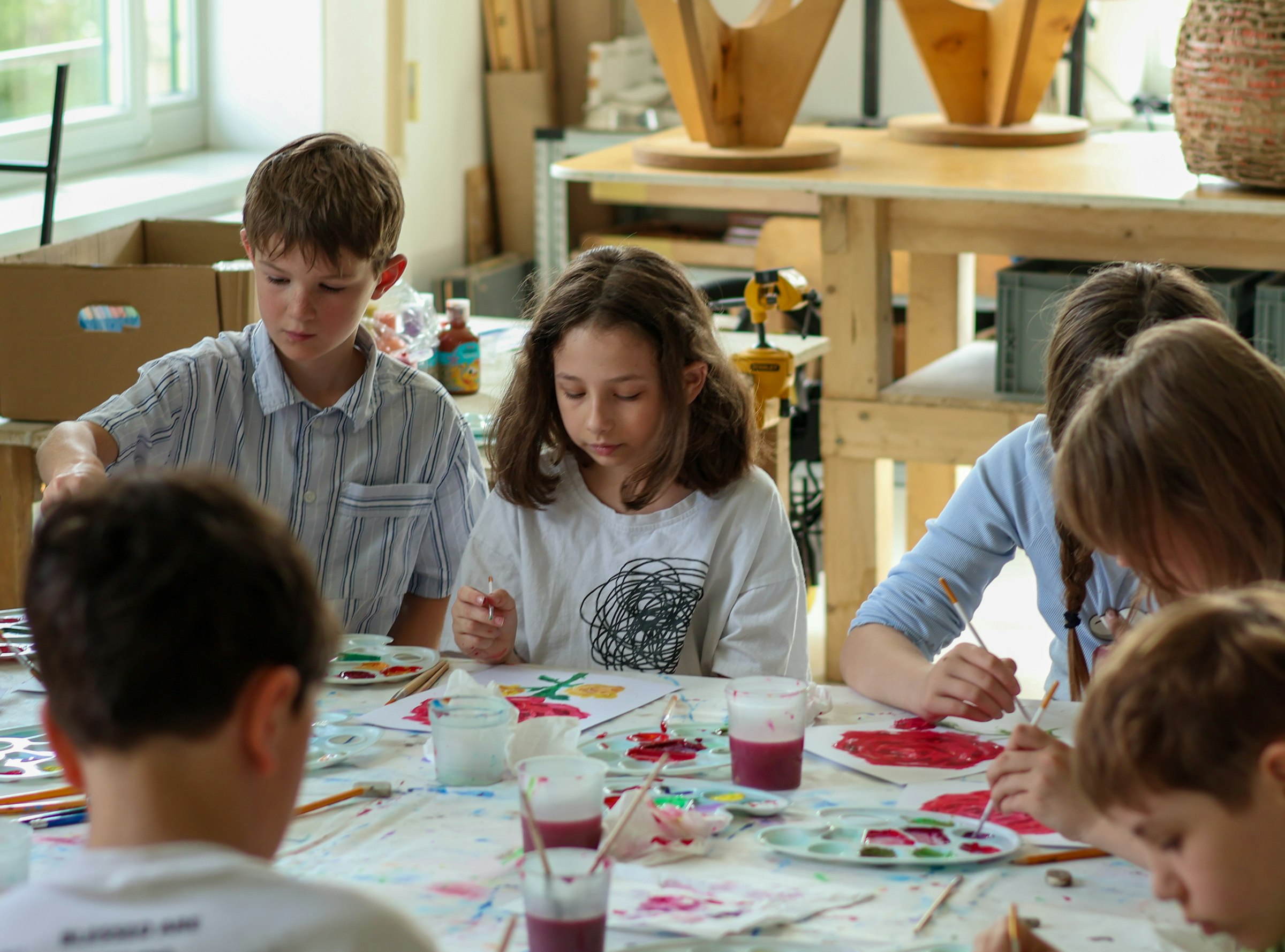
Children painting with watercolours together in a classroom

For Students

  1. 01

    They Speak From Day One

    No word lists to get through before the first real conversation.

  2. 02

    Mistakes Feel Safe

    The partner models the right words instead of marking them wrong, so students keep talking.

  3. 03

    The Topic Is Theirs

    Missions are built around what each student chose, so they want to come back.

Children walking along a road to school

For Schools

  1. 01

    Placement in About Ten Questions

    A short spoken conversation places each student on a 40-step scale aligned to CEFR, from A1.1 to B2.10.

  2. 02

    Progress Families Can See

    Each finished mission adds a can-do ability to the student's map, like "I can order at a bakery".

  3. 03

    Safe by Design

    Every mission passes automatic quality and safety checks, and missions students struggle with are flagged for review.

A Traditional Class

  • The teacher talks while thirty students listen.
  • Words on flashcards, with no rhythm or melody.
  • Mistakes marked in red.

A Cadenza Studio

  • Every student speaks from minute one.
  • Melody, rhythm and timing before grammar.
  • Mistakes said back the right way, and the talk goes on.
Deployment

We run the technology. Your teachers teach.

One partner for the platform, the AI and the people who help your teachers succeed.

Nothing to Install

Cadenza runs in the web browser. We host, run and update it in the EU, so there's no IT project on your side.

Your Choice of AI

Use Prosoda AI, or connect your own AI infrastructure. Either works, and you can switch later.

A Dedicated Concierge

One named person for technical support, teacher training and ongoing advice, from the first call onwards.

How Deployment Works
Request a Pilot

Start with one class

The Institutional Pilot is small on purpose: one class, one language, six weeks, and one clear question answered.

  1. Week 0

    A 30-Minute Call

    Pick one class, one language and the one thing you want to see improve.

  2. Week 1

    Placement and Interests

    Each student does a short spoken placement and types what they want to talk about.

  3. Weeks 2–5

    Five Minutes a Day

    Students work through their missions. Your concierge stays close to the teacher.

  4. Week 6

    Review Together

    We compare what each student can say and do now, and you decide what's next.

A graduate in cap and gown facing her classmates

Leave your email or phone number

We'll get back to you within 24 hours.

We only use this to reply to you.

Prefer email? [email protected]

For schools that measure success in what their students can do.